


I don’t think I’ve ever heard “acetaminophen” be pronounced that way before. I guess we learn something new every day, even the President.
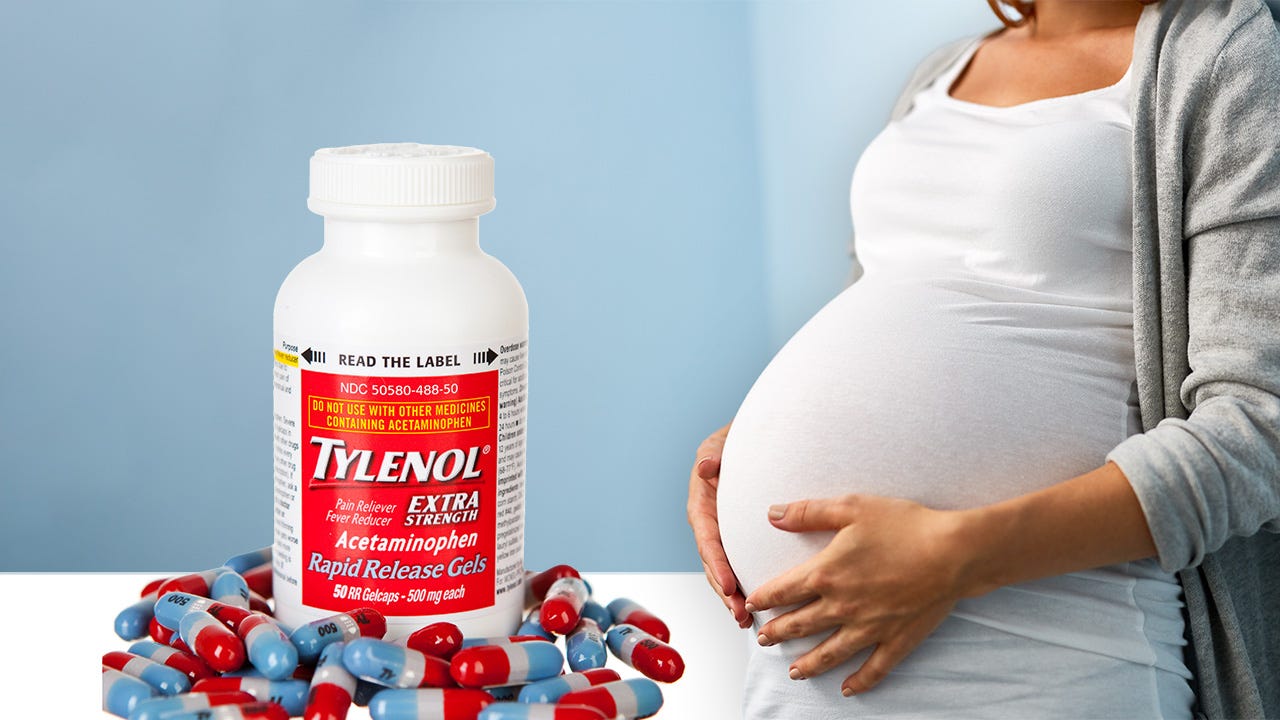
Look, I know acetaminophen (APAP) is a big word and what else I know is that acetaminophen better known as Tylenol does NOT, and I repeat, does NOT cause autism. Tylenol is one of the few pain relievers actually considered safe to take during pregnancy with a doctor’s consultation.
Trump stated in this week’s press conference that the administration has linked rising rates of autism with pregnant people taking Tylenol and goes on to advise pregnant women to just “tough it out” when they have a fever despite the fact that infections followed by a fever, specifically during the 2nd trimester, increases the risk of autism two-fold.
Now don’t get me wrong, medication and pregnant people don’t have a great history to be fair. I’m looking at you thalidomide. But APAP has been around for a long time. It’s been prescribed for pain since 1893, so we have about 132 years of general data and now many decades of robust clinical data that is open access on the FDA for anyone to look up. If you do, you can clearly see there is no evidence and never has been any evidence of Tylenol causing any autism or autism-related issues. But even then we have to be very careful about what we prescribe to pregnant people because for the vast majority of drugs, not just Tylenol, we don’t have clinical trial data in the pregnant population.
Tylenol becomes one of those situations you learn in clinical practice where you need to assess the risk benefit: in an ideal world, a pregnant person would not need to take any medications during the pregnancy, but life happens. So, if there is a fever or infection, it’s more important to prioritize the health and safety of the mom and baby by controlling the infection or fever with medications like Tylenol rather than “toughing it out”.
But this news didn’t come out of nowhere, so what prompted this press conference?
It’s mostly in reaction to these two studies: the first one doesn’t even assess for autism (it’s for ADHD) and the second one assessed for both ADHD and ASD with a major caveat that their data is based on self reported anecdotes by the mothers. The problem with these studies and any study assessing this is it’s not taking into account why pregnant people are taking Tylenol in the first place - to reduce pain or a fever.
But here’s the real issue: neither study can separate out whether autism came from APAP or from whatever was making these women sick enough to need painkillers in the first place. No study has been able to tease out that difference.
Now let’s talk about studies that actually matter
The study analyzed data on nearly 2.5 million children born in Sweden between 1995 and 2019 and data on acetaminophen prescriptions during pregnancy, self-reported use collected by midwives, and whether children received autism diagnoses.
But here’s the most fascinating and important aspect of this study: they compared siblings where only one was exposed to acetaminophen in the womb. Same parents, same genes, same household—if acetaminophen were the culprit, you’d expect to see differences between these siblings. They found nothing. A similar Japanese study with over 200,000 children came to the same conclusion and found no link between APAP use in pregnancy and autism.
So if Tylenol isn’t causing autism, what is?
The short answer is we don’t know. We’ve been studying it for more than 50 years & it’s just a complex disease. But from what we understand autism is primarily genetic and/or environmental. The clearest risk factor we know of is older parental age, but even that may tie back to genetics since we accumulate genetic mutations as we age.
The administration is trying to slap a simple answer on a very complex problem while causing undue mass fear and gross misinformation backed by weak evidence. The American College of Obstetricians and Gynecologists have given a statement saying that, “the administration’s announcement is not backed by the full body of scientific evidence and dangerously simplifies the many and complex causes of neurologic challenges in children. It is highly unsettling that our federal health agencies are willing to make an announcement that will affect the health and well-being of millions of people without the backing of reliable data.”
What does this mean for public trust in health institutions when they appear to abandon their own evidence standards? And perhaps most importantly: how do we protect evidence-based medicine from political interference?